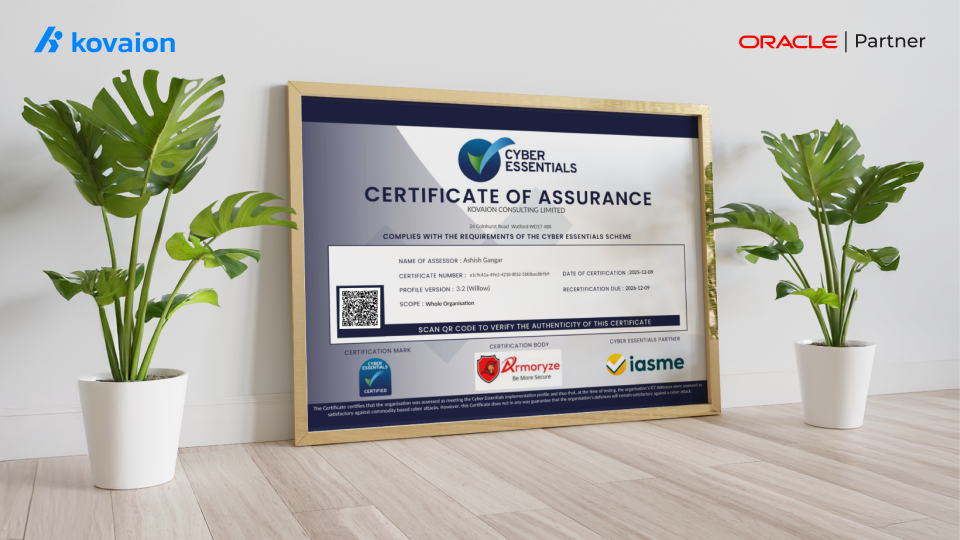
Celebrating the Achievement of a Cybersecurity Certification
In a world where cyber threats evolve daily, how do you prove you’re a defender, not a vulnerability? With cybersecurity roles growing 35% faster than the average job, a certification isn’t just an asset; it’s your definitive answer.
Earning a cybersecurity certification is a decisive career milestone. It validates a professional’s dedication to mastering security best practices and applying proactive measures against evolving cyber risks. As organizations intensify their focus on threat protection, certified individuals stand out as reliable assets who can strengthen defenses, ensure compliance, and elevate the overall security posture through informed action.
Highlights:
- Demonstrates applied capability in critical security best practices.
- Strengthens readiness to lead and support cyber threat protection strategies.
- Reflects a commitment to continuous skill advancement through structured training.
- Signifies the attainment of a respected, industry-recognized qualification.
- Aligns practical competence with organizational and industry cybersecurity standards.
What Is a Cybersecurity Certification?
A Cybersecurity Certification is a formal credential that validates an individual’s expertise in assessing and managing digital risks according to global industry standards. It provides a structured pathway for building deep cybersecurity knowledge and demonstrating hands-on competence in areas like network defense, secure configuration, and threat mitigation. More than a certificate, it serves as verified proof of readiness for roles demanding technical precision, analytical rigor, and adherence to proven frameworks, making it a key indicator of professional preparedness in a landscape of escalating security challenges.
Key Highlights:
- Establishes foundational and advanced expertise across sectors.
- Validates essential skills in risk assessment, security controls, and threat response.
- Serves as a credible qualification aligned with compliance and industry requirements.
- Enhances professional credibility by demonstrating verified competence.
- Supports long-term career growth through structured learning and continuous development.
Why Earning This Certification Matters
In an era of rising threats, this certification is a strategic investment in your capabilities. It moves beyond theory to validate your readiness to protect critical assets using proven security best practices. For professionals, it accelerates career growth by signaling to employers verified expertise and a commitment to excellence, qualities essential for roles in compliance, threat hunting, and security architecture.
Why It Matters:
- Strengthens proven, hands-on cyber threat protection capabilities.
- Enhances credibility and competitiveness in the IT security job market.
- Validates your skills through a recognized, vendor-neutral credential (e.g., CISSP, Security+).
- Demonstrates dedication to continuous professional development.
- Aligns your expertise with the cybersecurity industry standards that employers trust.
- Provides a confidence-building foundation for sustained career advancement.
Key Skills Gained Through Cybersecurity Training
This certification equips you with the essential skills that form the backbone of modern defense strategies. Through targeted training and practical labs, you transform theoretical knowledge into actionable expertise.
Core Skills Gained:
- Threat Intelligence & Analysis: Building awareness of attack vectors, threat actors, and emerging risk patterns.
- Secure Design & Access Control: Implementing security best practices for system hardening and identity management.
- Network & Endpoint Security: Safeguarding infrastructure and devices to create effective layers of defense.
- Risk & Vulnerability Management: Developing the analytical skills to identify, evaluate, and mitigate critical risks.
- Incident Response: Preparing to manage real-time security events with structured, decisive actions.
How This Certification Enhances Professional Credibility
This credential acts as a powerful trust signal. It provides third-party validation of your competence, giving employers and clients confidence in your ability to safeguard systems and data. It demonstrates a commitment to the highest cybersecurity of industry standards, and a career built on continuous improvement.
Why It Enhances Credibility:
- Demonstrates knowledge validated against rigorous, independent benchmarks.
- Reinforces trust by proving adherence to globally recognized security frameworks.
- Highlights hands-on skills essential for securing complex digital environments.
- Signals of readiness for advanced responsibilities and leadership opportunities.
- Positions you as a dependable professional with measurable, verified expertise.
Impact on Career Growth in the Cybersecurity Field
This certification is a catalyst for advancement. It distinguishes you in a competitive market, opening doors to specialized roles in penetration testing, security analysis, cloud security, and leadership. It is often a listed requirement for promotion, providing a clear pathway from technical expertise to strategic influence.
How It Supports Career Growth:
- Strengthens candidacy for high-demand, high-salary roles across industries.
- Validates the critical skills needed for both entry-level and advanced positions.
- Enhances employability and provides leverage in compensation negotiations.
- Demonstrates applied expertise that aligns directly with employer security needs.
- Builds a future-ready career foundation through structured, respected training.
Building Real-World, Practical Expertise
The true value lies in practical application. This certification bridges the gap between knowledge and action through hands-on labs, threat simulations, and scenario-based assessments. You gain the confidence to not only understand threats but to effectively neutralize them.
How It Strengthens Real-World Expertise:
- Converts theoretical knowledge into tactical, hands-on capability.
- Builds advanced expertise for high-impact operational and strategic roles.
- Sharpens critical thinking through real-world problem-solving scenarios.
- Ensures alignment with current tools, tactics, and procedures used in the field.
- Demonstrates the practical competence expected of a certified professional.
The Role of Certification in Building Trust
In cybersecurity, trust is the most critical currency. This certification builds trust by offering tangible proof of your skills and commitment. For organizations, hiring a certified professional mitigates risk and provides assurance that their defenses are guided by verified expertise.
How Certification Builds Trust:
- Provides independent, objective validation of your cybersecurity expertise.
- Shows mastery of essential skills and adherence to proven security principles.
- Reflects a commitment to ethical practices and ongoing professional development.
- Offers assurance to employers and clients through a recognized, credible credential.
- Strengthens long-term professional relationships based on demonstrated reliability.
Conclusion: A Milestone Toward a More Secure Future
Achieving a Cybersecurity Certification is more than an accolade—it’s a commitment to excellence and a key step in forging a resilient career. It validates your skills, amplifies your credibility, and prepares you to meet evolving threats with confidence. By aligning with global standards and committing continuous learning, you are not just advancing your career; you are becoming an essential architect of a more secure digital future.
Key Takeaways:
- A significant milestone that accelerates cybersecurity career growth.
- Demonstrates deep, applied knowledge and validated hands-on expertise.
- Strengthens professional credibility and trust across the industry.
- Validates your capability to implement critical security best practices.
- Positions to lead organizational cyber threat protection strategies.
- Represents a respected qualification and a commitment to the profession.
- Establishes a foundation for lifelong learning and strategic impact.