Oracle Touchpoints in Oracle HCM Cloud
Overview:
Faster continuous engagement between employees and managers by giving every worker a voice and every manager the tool to act as an HCM touchpoint is an active employee listening and engagement solution. It is designed to help capture, track, and take action on all-around employee sentiment, and it is really designed to strengthen the relationships that managers have with their employees.
Prerequisite
To access all Touchpoints features that are applicable to them, managers and employees need to have the appropriate user roles.
| Duty Roles | Job or Abstract Role |
| Access Touchpoints by Worker ORA_HRE_ACCESS_TOUCHPOINTS_BY_WORKER | Employee Contingent Worker |
| Access Touchpoints by Manager ORA_HRE_ACCESS_TOUCHPOINTS_BY_MANAGER | Line Manager |
Profile Options for Touchpoints
To use Touchpoints, enable the following profile options:
| Profile Option Code | Profile Option Name |
| ORA_HRE_ENABLE_TOUCHPOINTS | Enable Oracle Touchpoints |
Manager view
- Step 1: My team >> Quick actions >> Quick Actions >> Touchpoints
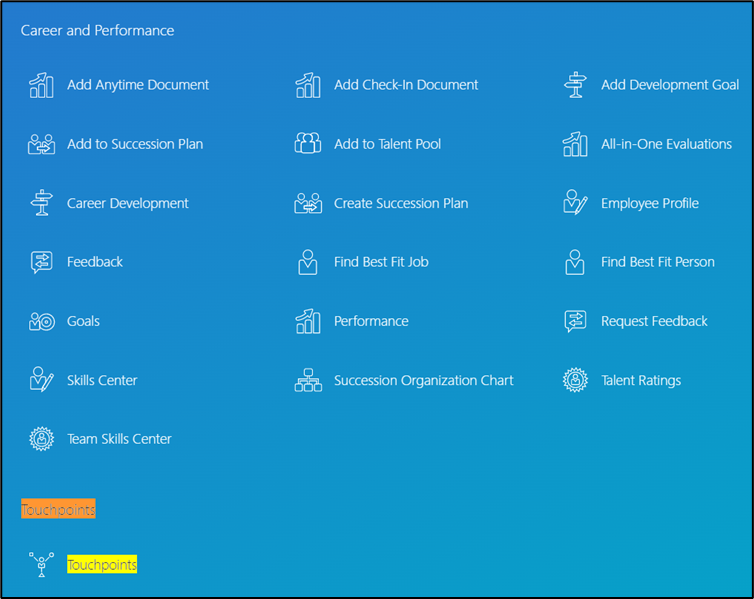
- Step 2: Action >> The manager can send feedback, an invite card, and schedule a meeting with the employee
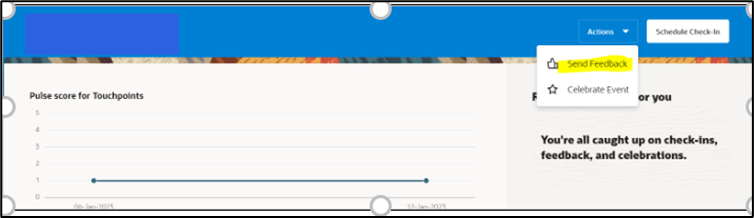
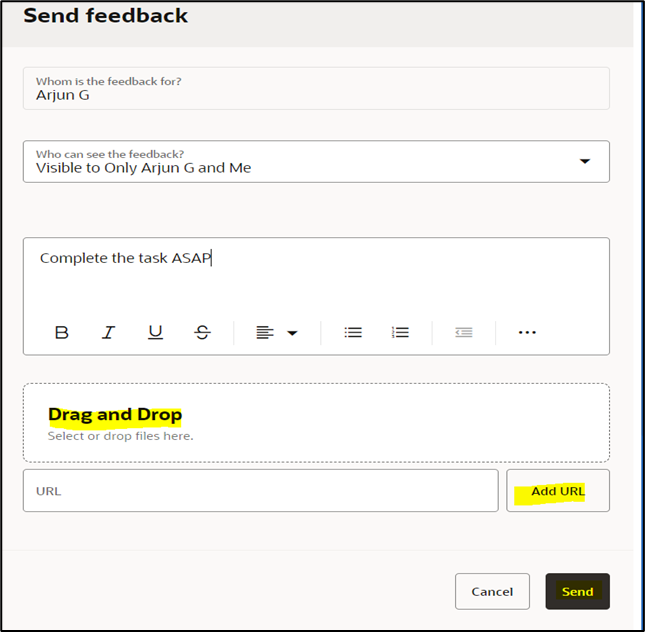
- Step 3: Click an Employee >>Actions >> Feedback. In this feedback page, the manager can customize who can see the feedback.
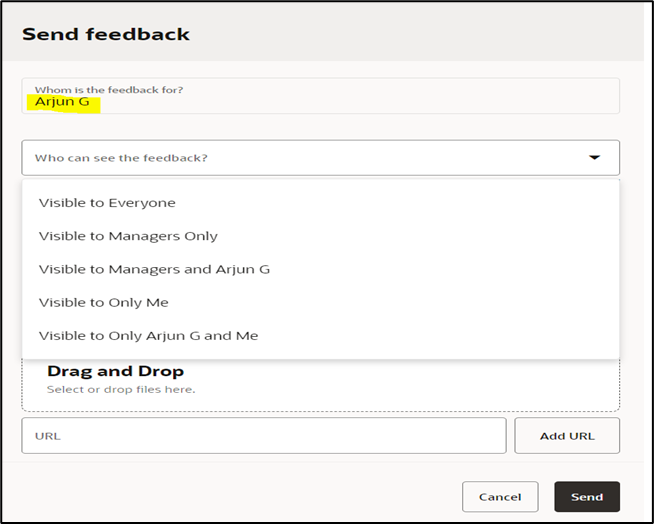
- Step 4: By using the drag and drop option, the manager can share the files, images, and URL with the employee
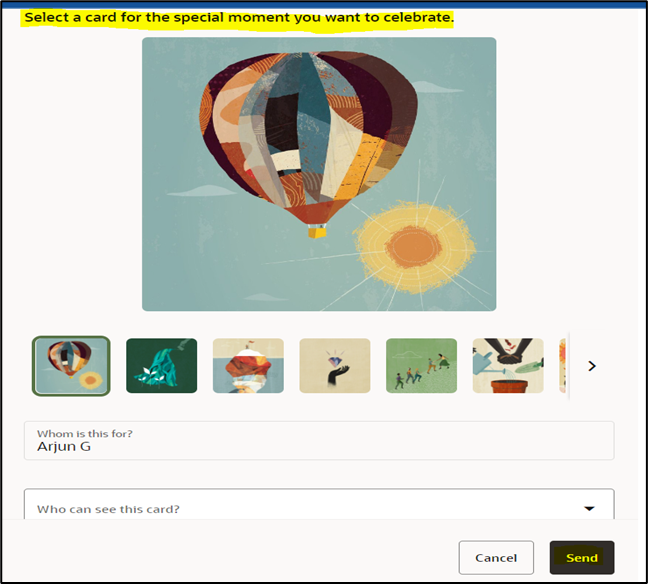
- Step 5: Actions >> Celebrate event. By using this, the manager can send a card to employees.
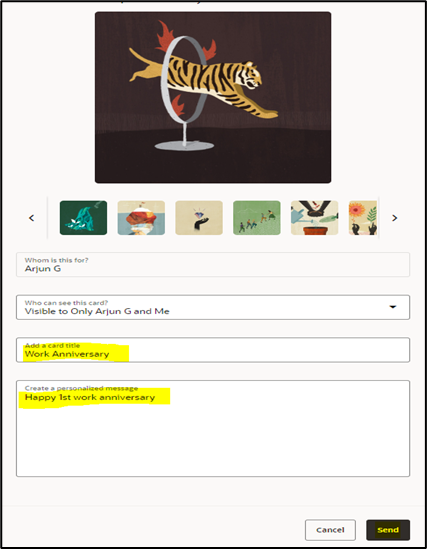
- Step 6: The manager can change the visibility by using the drop down in who can see this card option.
- Step 7: Schedule check-ins >> The manager can schedule a meeting. Select a date to check in.
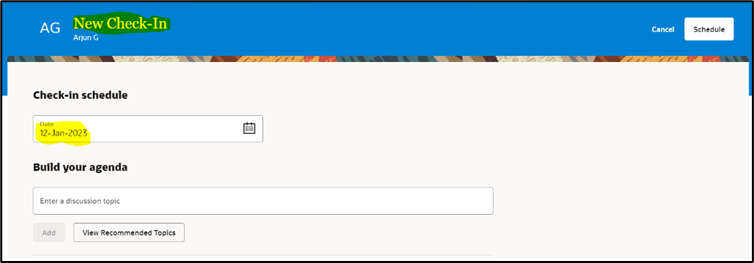
- Step 8: Can create only 1 check-in for the same date, manager, and worker.
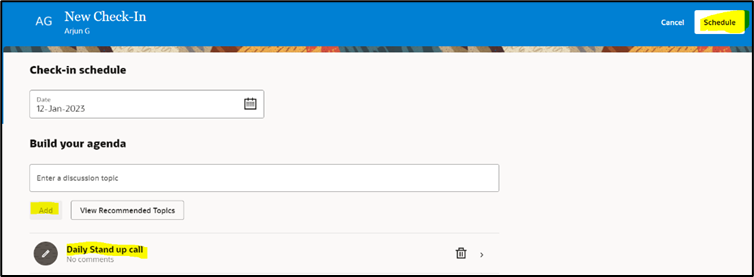
- Step 9: This Chart describes a manager’s interaction with employees on a daily basis.
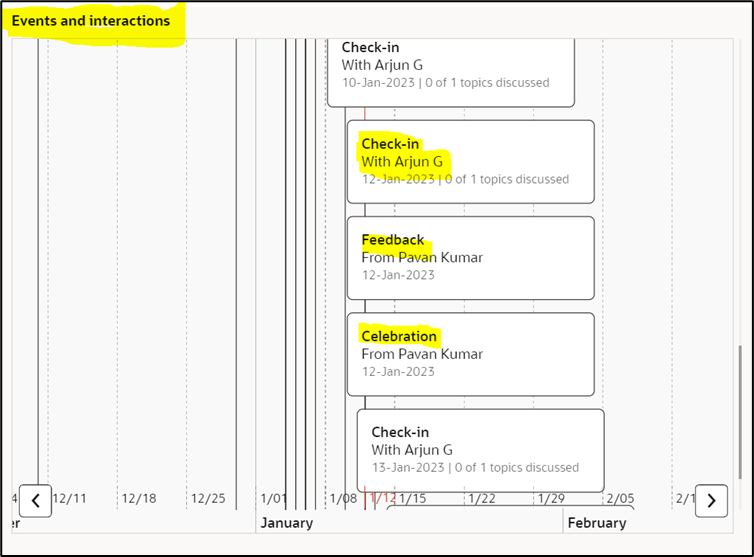
Employee View
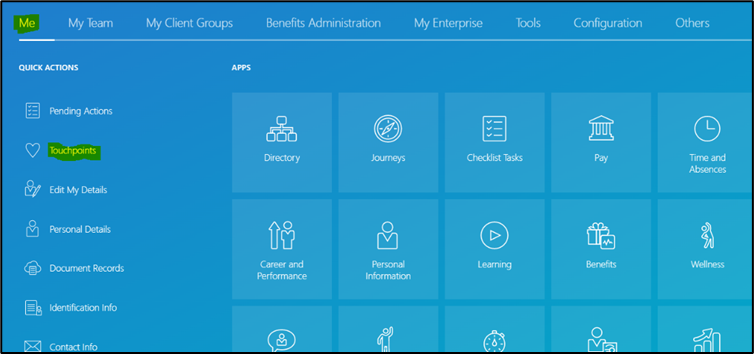
- Step 10: Me >> Quick Actions >> Touchpoints
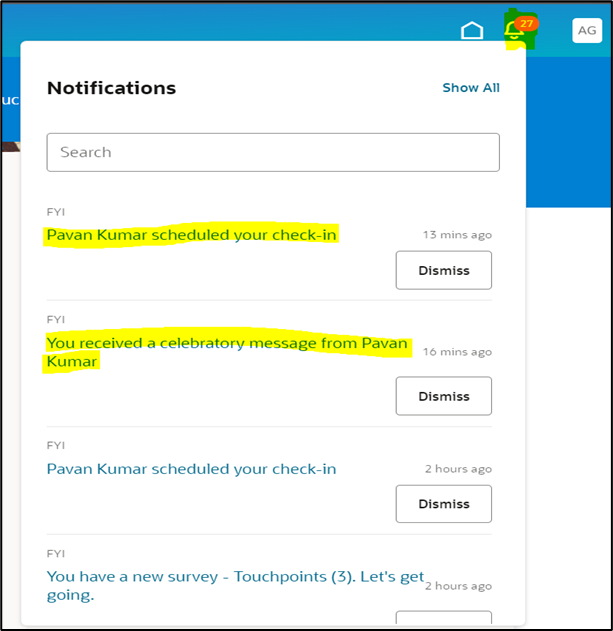
- Step 11: In the notifications icon manager, the scheduled check-in and celebratory message are shown from
- Step 12: Employee view of touchpoints.
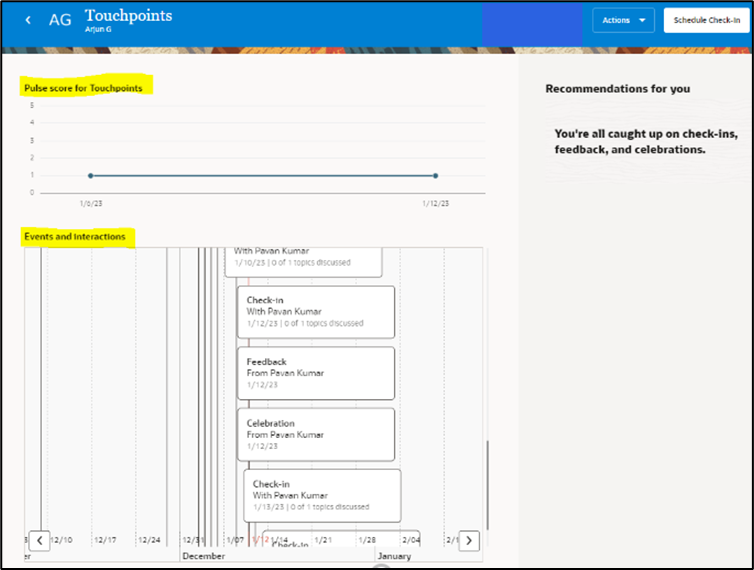
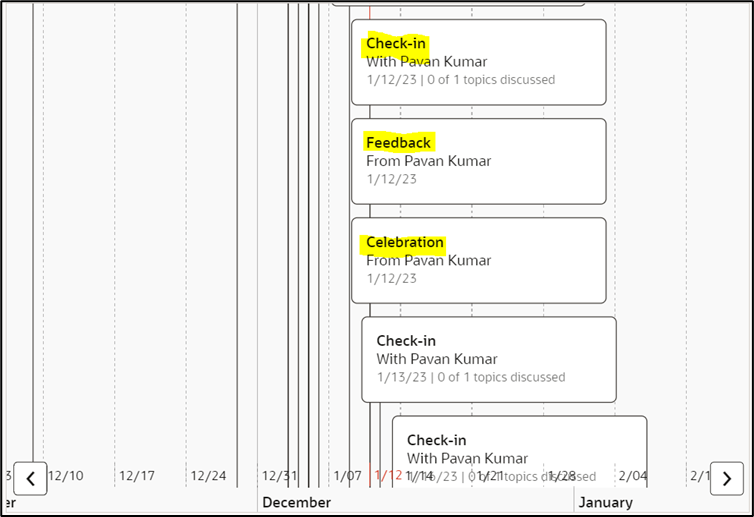
- Step 13: In events and interactions, the feedback, celebration card, and schedule check-in which send by manager are visible.
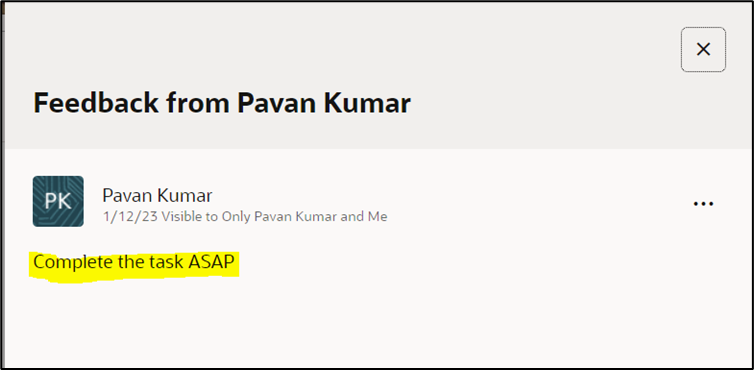
- Step 14: Click on feedback >> employee can revert the feedback to the manager
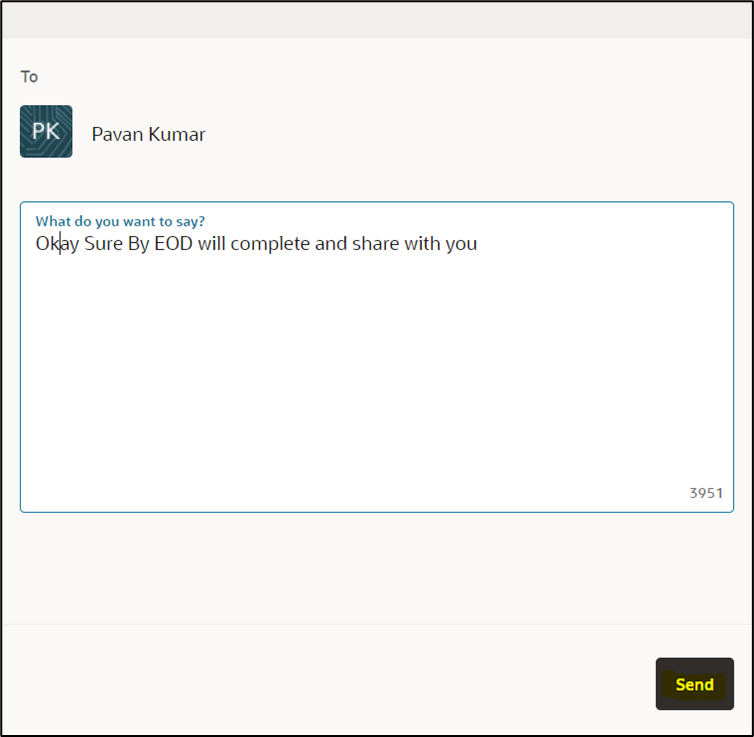
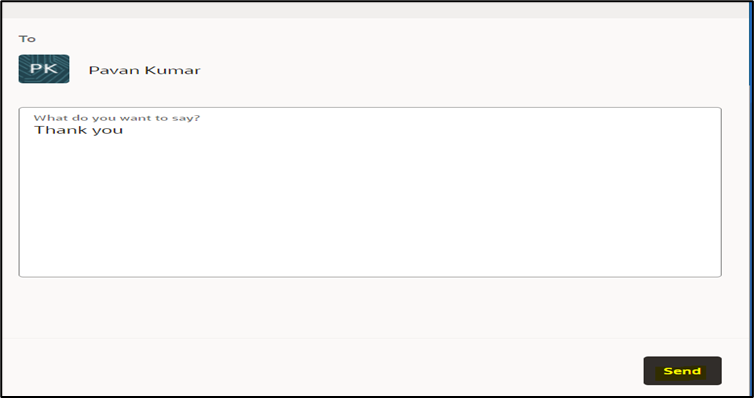
- Step 15: Click on dot lines >> send the reply message.
- Step 16: In the event and celebration, click the celebration card.
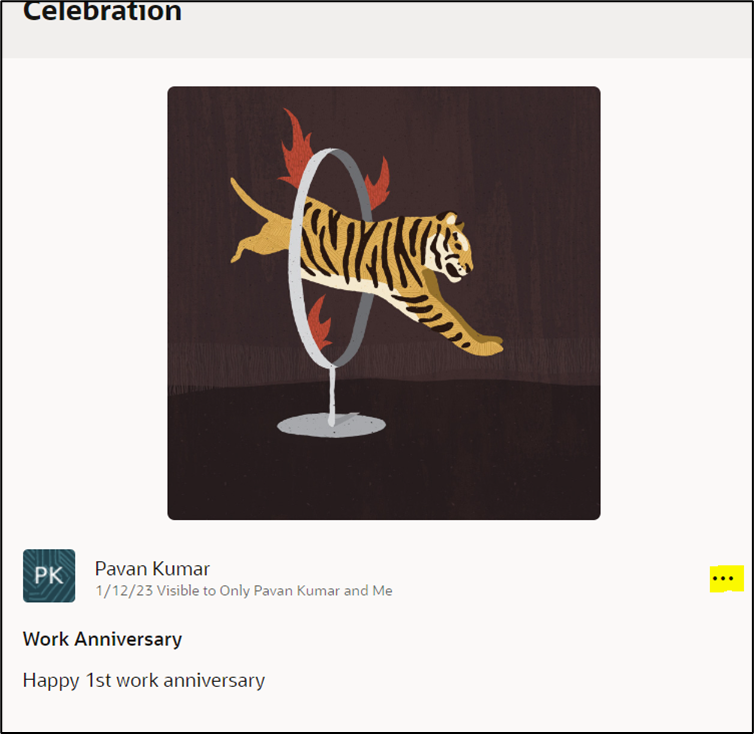
- Step 17: The employee can revert the celebration card to the employee.
- Step 18: In the event and celebration, click check-in.
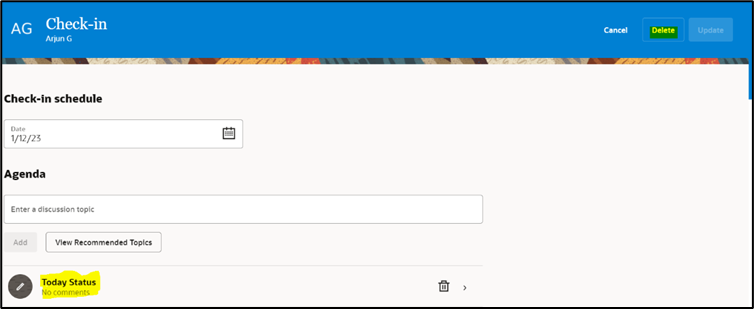
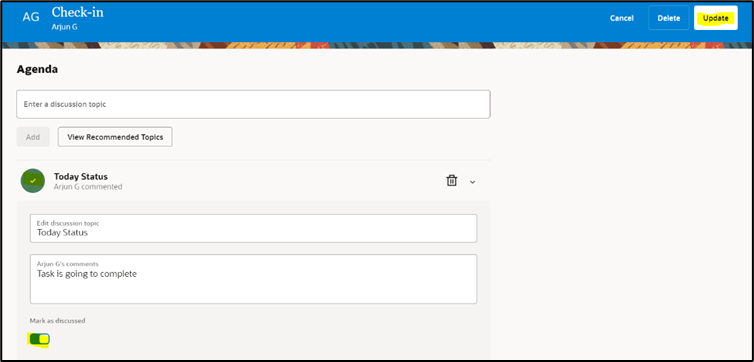
- Step 19: Employee can submit their comments and mark as discussed.
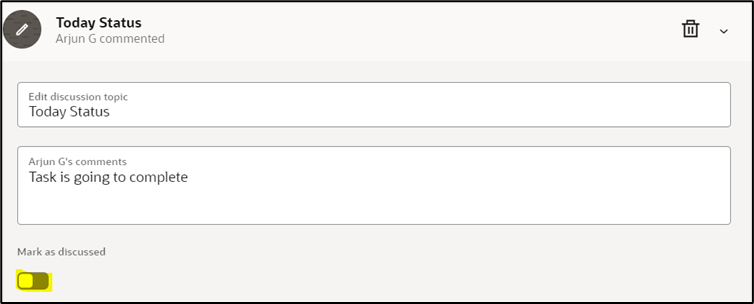
- Step 20: Once Employee marked as discussed, a green tick and an update icon will pop up. Click update
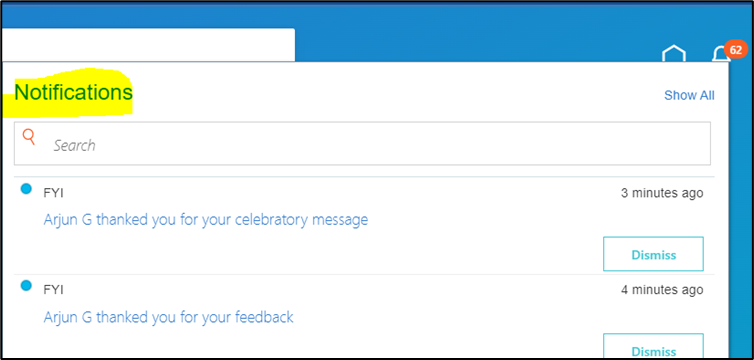
- Step 21: From the manager’s view of the notification. Employee replied events are shown in the manager notification icon.
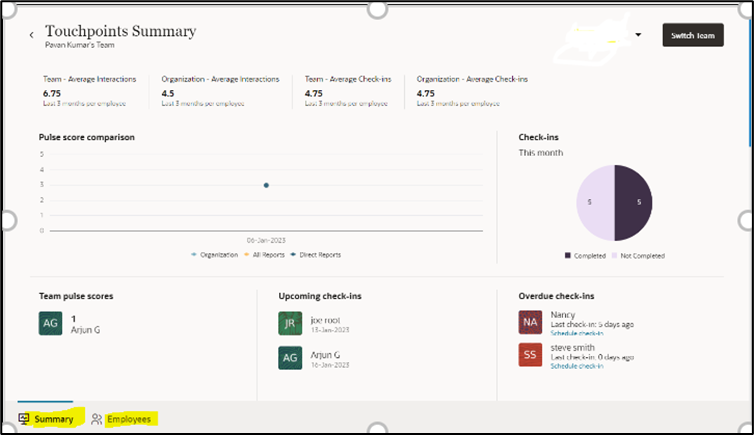
- Step 22: This is the summary page of Manager View. It shows the employee’s average interaction with the manager. Upcoming Check-ins of employees and pulse score of employees.
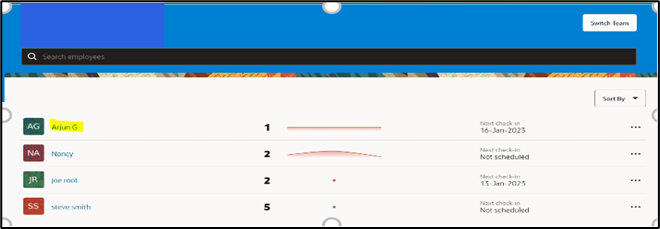
- Step 23: This is the employee page of the manager view. Numbers indicate the score of an employee, and the pulse graph of each employee is also visible on this employee page.
Business Benefits of Touchpoints
1. Enhances User Experience
Touchpoints help organisations create meaningful and consistent interactions throughout the employee, customer, or candidate lifecycle. By facilitating regular communication, feedback exchanges, and recognition opportunities, touchpoints ensure individuals feel heard, valued, and supported at every stage of their journey. A well-structured touchpoint strategy reduces communication gaps, improves transparency, and contributes to a more positive overall experience.
2. Improves Engagement
Regular and purposeful touchpoints enable organisations to connect with employees and customers at the right time with relevant information, guidance, and actions. By fostering ongoing conversations rather than relying solely on periodic reviews or surveys, organisations can strengthen relationships, encourage participation, and maintain higher levels of engagement. This proactive approach helps identify concerns early and creates opportunities for continuous improvement.
3. Increases Productivity and Performance
When managers and employees engage in frequent check-ins, goal discussions, and feedback conversations, expectations become clearer, and performance challenges can be addressed more quickly. Touchpoints help keep employees aligned with organisational objectives while providing timely support and recognition that motivates individuals to perform at their best.
4. Strengthens Brand and Organisational Culture
Consistent touchpoints reinforce organisational values, communication standards, and cultural initiatives. Whether through employee recognition, career development discussions, or customer interactions, organisations can deliver a unified experience that reflects their brand identity and commitment to stakeholder success. This consistency helps build trust and strengthens long-term relationships.
5. Enables Data-Driven Decision Making
Every touchpoint generates valuable insights into employee sentiment, engagement levels, communication effectiveness, and overall organisational health. Managers and HR leaders can leverage this information to identify trends, address concerns proactively, measure program effectiveness, and make informed decisions that improve workforce outcomes and business performance.
6. Boosts Employee and Customer Satisfaction
Personalised, timely, and relevant interactions help individuals feel acknowledged and appreciated. Employees who receive regular feedback and recognition are more likely to feel engaged and motivated, while customers who experience proactive communication are more likely to remain satisfied and loyal. Improved satisfaction levels often lead to stronger retention and advocacy.
7. Supports Talent Retention and Development
Touchpoints provide a structured framework for career discussions, coaching, mentoring, and development planning. By maintaining ongoing dialogue between managers and employees, organisations can better understand career aspirations, address development needs, and create growth opportunities that encourage long-term retention.
8. Improves Organisational Agility
Continuous communication enables organisations to respond more quickly to changing business needs, workforce concerns, and operational challenges. Rather than waiting for annual reviews or formal surveys, leaders can gather real-time feedback and take corrective action when necessary, helping the organisation remain agile and responsive.
9. Supports Business Growth
Effective touchpoint management strengthens relationships, improves engagement, and creates a more connected workforce. These benefits contribute directly to improved productivity, reduced turnover, higher customer satisfaction, and stronger organisational performance. By optimising interactions across the employee and customer journey, organisations can unlock new opportunities for growth, efficiency, and long-term success.
Conclusion
Oracle Touchpoints serves as a powerful engagement platform that helps organisations foster meaningful, ongoing communication between managers and employees. Rather than limiting conversations to annual performance reviews or periodic surveys, Touchpoints encourages continuous dialogue through structured interactions such as check-ins, feedback discussions, recognition moments, coaching conversations, and development planning activities.
By providing an intuitive and user-friendly experience for both managers and employees, Oracle Touchpoints makes it easier to capture employee sentiment, track interactions, and maintain visibility into important conversations. Features such as automated notifications, configurable visibility settings, interaction history, and structured discussion topics help ensure that communication remains transparent, consistent, and actionable.
Elevate Employee and Customer Journeys with Smarter Touchpoints
Every interaction matters. Whether engaging employees, customers, candidates, or business stakeholders, organisations that deliver timely, personalised, and meaningful experiences are better positioned to build trust, strengthen relationships, and achieve sustainable growth. Touchpoints provide a structured approach to managing these interactions, ensuring that communication remains relevant, consistent, and impactful throughout every stage of the journey.
By implementing an effective touchpoint strategy, organisations can improve employee engagement, increase customer satisfaction, strengthen brand loyalty, and gain valuable insights that drive continuous improvement. Strategic touchpoints help create connected experiences that not only meet expectations but also contribute to better business outcomes, higher retention rates, and improved operational efficiency.
At Kovaion, our Oracle HCM expert solutions help organisations leverage Oracle Touchpoints and other employee experience solutions to create engaging, people-centric workplaces. From implementation and configuration to optimisation and strategic consulting, we work closely with organisations to design touchpoint frameworks that align with business objectives and workforce needs.