Oracle Integration Cloud (OIC) Gen 2 vs Gen 3
Oracle Integration Cloud (OIC) is Oracle’s cloud-based integration platform used to connect SaaS applications, on-premises systems, databases, APIs, and business processes.
Oracle Integration 3 (Gen 3) is the latest generation of Oracle Integration Cloud, offering an improved user experience, project-based development, enhanced monitoring, AI-assisted capabilities, better scalability, and simplified administration. In this blog, we will compare OIC Gen 2 and Gen 3, understand their differences, and explore the advantages of upgrading to Gen 3.
OIC Gen 2 Overview:
OIC Gen 2 provides integration development, process automation, Visual Builder, B2B, monitoring, and connectivity capabilities through a centralized interface.
Gen 2 Dashboard:
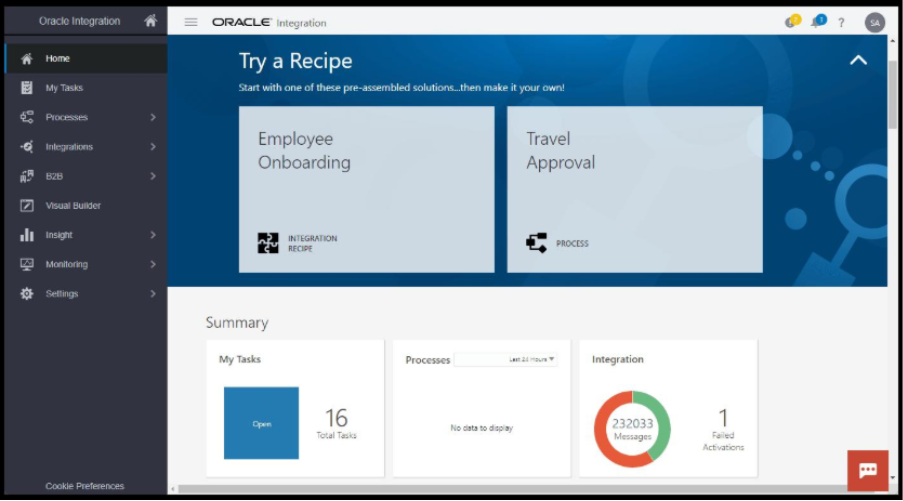
Key Features of Gen 2:
- Integration Development
- Process Automation
- Visual Builder
- B2B Integration
- FTP & File Processing
- Monitoring Dashboard
- Prebuilt Adapters
- Scheduled Integrations
OIC Gen 3 Overview:
Oracle Integration 3 introduces a modernized architecture with Projects, Observability, enhanced deployment management, embedded capabilities, and improved user experience.
Gen 3 Dashboard:
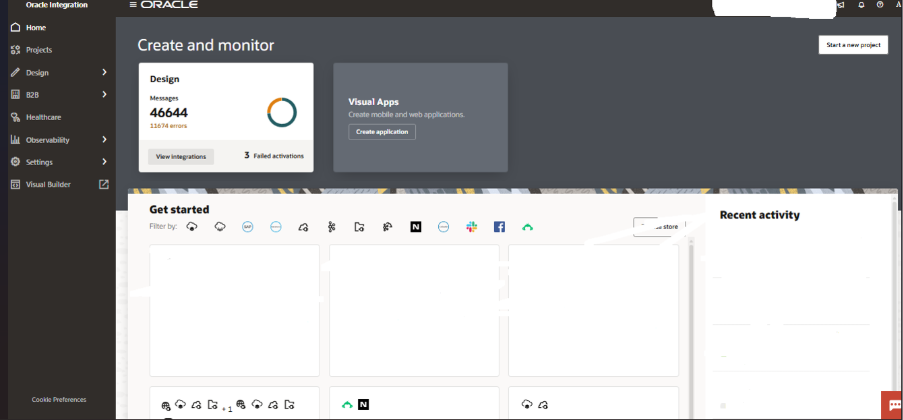
Key Features of Gen 3:
- Project-based development
- Enhanced observability
- AI-assisted development experience
- Improved deployment management
- Better scalability
- Extended monitoring retention
- Improved security and governance
- Modernized user interface
| Feature | OIC Gen 2 | OIC Gen 3 |
| User Interface | Traditional navigation | Modern project-centric interface |
| Development Model | Individual integrations | Project-based development |
| Monitoring | Standard monitoring | Advanced observability |
| Deployment | Integration-wise deployment | Project deployment |
| AI-assisted experience | Limited | AI-assisted experience |
| Retention Period | 3–30 days | Up to 32 days |
| For-Each Processing | 5000 records limitation | Unlimited processing |
| Scalability | Standard | Higher scalability |
| Resource Organization | Separate artifacts | Projects for grouping assets |
1. Projects – The Biggest Change in Gen 3:
One of the most significant enhancements in Gen 3 is the introduction of Projects.
In Gen 2, integrations, connections, lookups, and libraries are managed separately.
In Gen 3, all related artifacts can be grouped into a single project.
Project Structure in Gen 3:
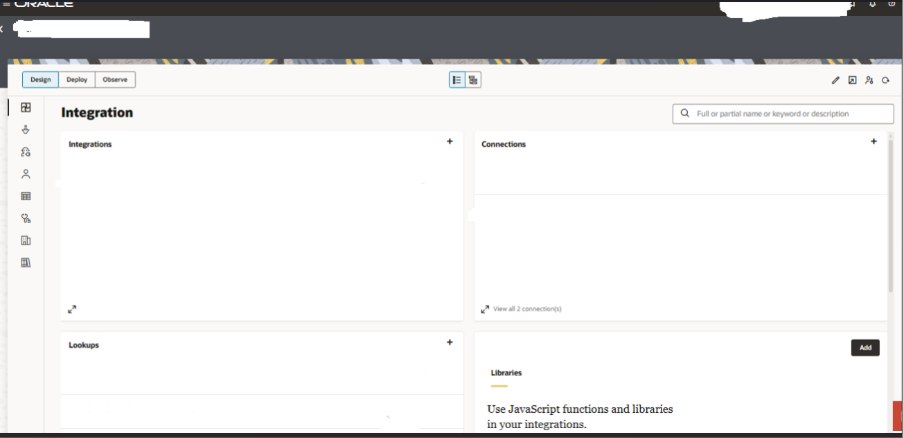
A project can contain:
- Integrations
- Connections
- Lookups
- Libraries
- Deployments
Benefits:
- Better organization
- Easier migration
- Team collaboration
- Simplified deployment
2. Improved Observability
Gen 3 introduces Observability, which provides a centralized monitoring experience.
- Benefits
- Runtime monitoring
- Schedule monitoring
- Audit tracking
- Error visibility
- Faster troubleshooting
This makes support and production monitoring significantly easier compared to Gen 2.
3. Enhanced Deployment Experience
In Gen 2:
Integrations are deployed individually.
In Gen 3:
Entire projects can be deployed together.
Related artifacts move as a unit.
Benefits:
- Reduced deployment effort
- Better release management
- Easier promotion across environments
4. User Interface Comparison
Gen 2 UI
Characteristics
- Menu-driven navigation
- Separate modules
- Traditional layout
Gen 3 UI
Characteristics
- Modern dashboard
- Project-oriented navigation
- Better visibility
- Simplified design
5. Scalability Improvements
Gen 3 offers better scalability compared to Gen 2.
Examples include:
- Increased active integration limits
- Better performance
- Improved infrastructure handling
- Enhanced cloud-native architecture
Gen 3 is designed to support larger enterprise workloads with better operational efficiency.
6. Security and Administration Enhancements
Gen 3 introduces improvements in:
- OIC Gen 3 integrates with Oracle Cloud Infrastructure (OCI) Identity and Access Management (IAM)
- Role-based access control
- Governance
- Instance management
- OCI-based administration
Oracle also manages several infrastructure responsibilities that previously required administrator intervention.
Migration from Gen 2 to Gen 3
Oracle provides an upgrade path from Gen 2 to Gen 3 without additional licensing cost.
Before upgrading:
- Review Visual Builder applications
- Validate integrations
- Verify custom endpoints
- Review authentication methods
- Test adapters and connections
After upgrading:
- Update IAM policies
- Revalidate connections
- Perform end-to-end testing
Advantages of Upgrading to Gen 3
- Better Developer Experience
- Modern UI
- Faster navigation
- Project organization
- Better Operations
- Enhanced monitoring
- Observability dashboards
- Better Governance
- Improved access control
- Simplified administration
- Better Scalability
- Higher processing limits
- Improved performance
- Future Readiness
- AI-powered enhancements
- Oracle’s strategic platform direction
Conclusion
Oracle Integration 3 is more than just a UI upgrade. It introduces a project-centric development model, advanced observability, simplified deployments, improved scalability, and enhanced governance capabilities.
Organizations currently using OIC Gen 2 can benefit from improved developer productivity, easier monitoring, and better lifecycle management by moving to Gen 3. As Oracle continues investing in Integration 3, it becomes the preferred platform for future integration development and enterprise automation initiatives
Accelerate Your Oracle Integration Journey with Kovaion
Whether you’re planning to migrate from OIC Gen 2 to Gen 3, modernize existing integrations, or build new enterprise integration solutions, Kovaion’s Oracle Integration consultants are here to help. From Oracle Integration Consulting and OIC Implementation to Migration Services, Integration Development, and Managed Support, we deliver scalable solutions tailored to your business needs.
Partner with Kovaion to simplify complex integrations, improve operational efficiency, and maximize the value of your Oracle ecosystem. Connect with our experts today to explore how our Oracle Integration services can help you build a future-ready integration platform.
Modernize Your Oracle Integration Environment with Kovaion
Planning to move from OIC Gen 2 to Gen 3 or optimize your existing integration landscape? Kovaion’s Oracle Integration Consulting experts help organizations design, implement, and modernize integration solutions that improve connectivity, scalability, and operational efficiency. Our team works closely with you to ensure a smooth transition while helping you make the most of Oracle Integration Cloud’s latest capabilities.
Whether you’re starting a new integration initiative or upgrading your current environment, Kovaion provides the expertise to help you accelerate your digital transformation with confidence. Connect with our specialists to discover how we can support your Oracle Integration journey.