How Oracle Enterprise Data Management (EDM) Simplifies HR Data Management

Introduction:
Managing Human Resource (HR) data in large organizations can be complex due to the frequent structural changes in departments, cost centers, reporting hierarchies, and employee classifications. HR data must remain consistent across multiple enterprise systems such as workforce planning, payroll systems, and financial reporting tools.
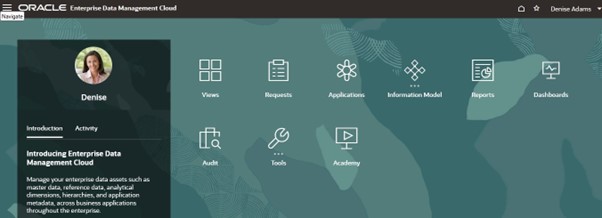
Oracle Enterprise Data Management Cloud (EDM) plays a critical role in simplifying and governing HR-related master data across these systems. As part of the Oracle Enterprise Performance Management Cloud (EPM Cloud) suite, Oracle EDM enables organizations to centrally manage enterprise structures and ensure consistent HR data across applications.
This blog explains how Oracle EDM helps organizations manage HR data effectively and why it is becoming an essential tool for enterprise data governance.
HR Data Management Challenges in Organizations:
HR systems manage several important organizational structures such as:
- Departments
- Business Units
- Locations
- Job Hierarchies
- Cost Centers
- Reporting Structures
In many organizations, these structures exist in multiple systems including workforce planning tools like Oracle Planning and Budgeting Cloud Service, payroll systems, and reporting platforms.
Without a centralized management system, HR teams often face the following challenges:
- Inconsistent Organizational Hierarchies
A department structure may differ across planning, HRMS, and financial systems, leading to reporting inconsistencies.
- Manual Updates Across Systems
When a new department or cost center is created, the same change must be manually updated in multiple systems.
- Lack of Governance
HR structural changes may occur without proper approval workflows, increasing the risk of data errors.
- Limited Visibility of Changes
Organizations may not always know who made changes to HR structures or when they were made.
These challenges highlight the need for a centralized data governance solution like Oracle EDM.
Role of Oracle EDM in HR Data Management:
Oracle EDM provides a centralized platform to manage HR-related structures and hierarchies used across enterprise systems.
Instead of maintaining HR hierarchies separately in different applications, organizations can manage them in Oracle EDM and distribute them to downstream systems.
Some of the key HR structures managed in Oracle EDM include:
- Department hierarchy
- Cost center hierarchy
- Business unit structure
- Location hierarchy
- Workforce planning dimensions
By managing these structures centrally, organizations ensure that all systems use the same accurate HR data.
Managing HR Organizational Structures Using EDM:
In Oracle EDM, HR organizational structures are typically maintained as dimensions and hierarchies.
For example, a department structure might appear as follows:
Corporate
- Finance
- Human Resources
- Information Technology
- Sales
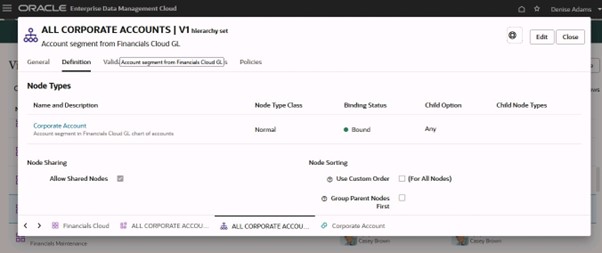
These hierarchies are managed within viewpoints, which provide a visual representation of the structure.
HR administrators can easily perform actions such as:
- Adding new departments
- Moving departments under new parents
- Updating department properties
- Deactivating obsolete structures
Governance and Workflow for HR Changes:
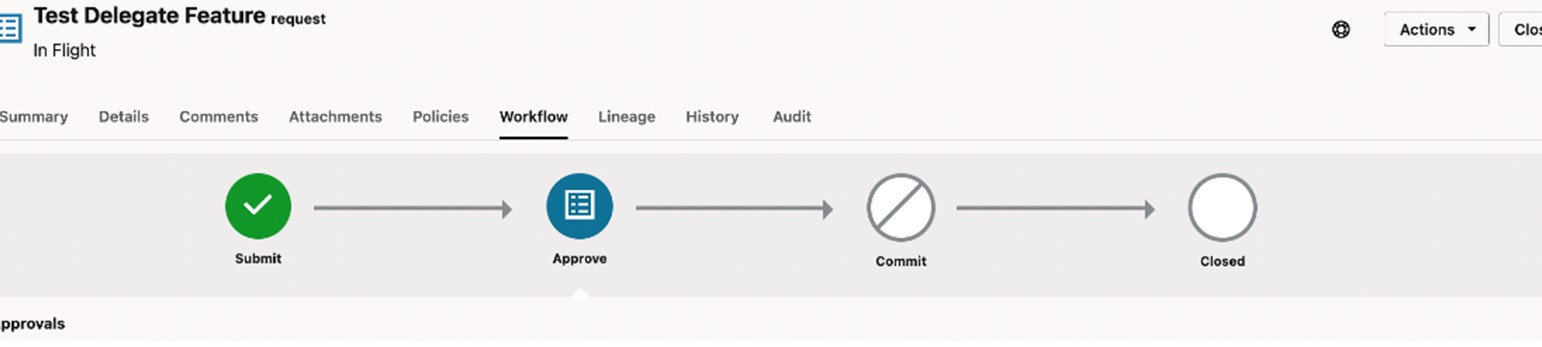
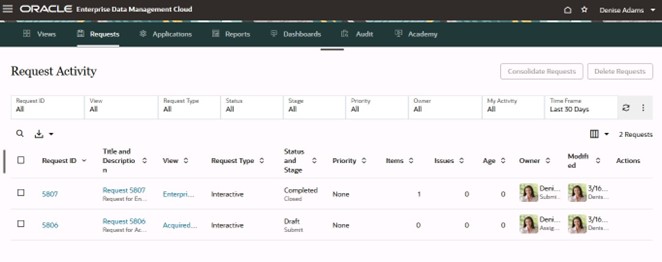
One of the most powerful features of Oracle EDM is its request and approval workflow mechanism.
Instead of directly modifying HR structures, users must submit change requests.
For example, if a new department needs to be created:
- A user submits a request in Oracle EDM.
- The request contains the proposed changes.
- The request goes through an approval workflow.
- HR or Finance approvers review the change.
- Once approved, the change is committed.
This process ensures that HR structural changes follow proper governance.
Benefits include:
- Controlled updates
- Reduced data errors
- Proper approval tracking
- Full audit trail
Synchronizing HR Data Across Systems:
Many organizations use multiple enterprise systems that rely on HR structures.
Examples include:
- Workforce planning systems
- Financial planning applications
- HR management platforms
- Data warehouses
Oracle EDM allows organizations to synchronize HR data across these systems automatically.
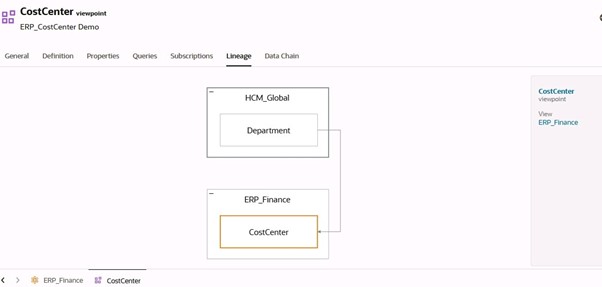
For instance, a department created in EDM can be propagated to:
- Workforce planning applications
- Financial reporting systems
- Analytics platforms
This eliminates the need to manually update each system individually.
The result is improved consistency across enterprise systems.
Workflow for HR Data Management in Oracle EDM:
Within Oracle Enterprise Data Management Cloud, HR-related data such as departments, cost centers, locations, and organizational units are maintained as dimensions and hierarchies inside viewpoints. HR administrators access the required viewpoint and create a request to make structural changes such as adding a new department, moving a team to another hierarchy, or updating member properties. These changes are performed through actions like Add Node, Move Node, or Update Properties within the request. The request then goes through a configured approval workflow where designated approvers review the modifications. Once approved, the request is committed, and the hierarchy is updated in the system. Oracle EDM also records the change in its audit history, ensuring full traceability of who made the change and when it occurred. This process allows HR structures to be maintained in a controlled and governed manner directly within the EDM system.
Benefits of Using Oracle EDM for HR Data Management:
Organizations implementing Oracle EDM for HR data management experience several advantages.
Improved Data Consistency
All HR structures are maintained in one centralized platform.
Strong Governance
Approval workflows ensure that structural changes are reviewed and approved before implementation.
Reduced Manual Effort
HR teams no longer need to update multiple systems separately.
Improved Data Transparency
Organizations gain full visibility into structural changes through audit logs and request history.
Better Workforce Planning
Accurate HR hierarchies enable better workforce planning and financial forecasting
Conclusion:
Managing HR data across multiple enterprise systems can be challenging without proper governance and centralized control.
Oracle Enterprise Data Management Cloud simplifies this process by providing a unified platform to manage HR structures, enforce approval workflows, and synchronize data across systems.
By leveraging Oracle EDM, organizations can ensure that HR data remains consistent, accurate, and governed across all enterprise applications. This not only improves operational efficiency but also supports better decision-making through reliable organizational data.
As HR systems continue to evolve and integrate with enterprise planning platforms, Oracle EDM will play an increasingly important role in maintaining structured and governed HR data management.
Author: Shanmugapriya Vaideeswaran, Consultant.