How Connected Oracle Cloud EPM Applications Transform Financial Planning and Reporting

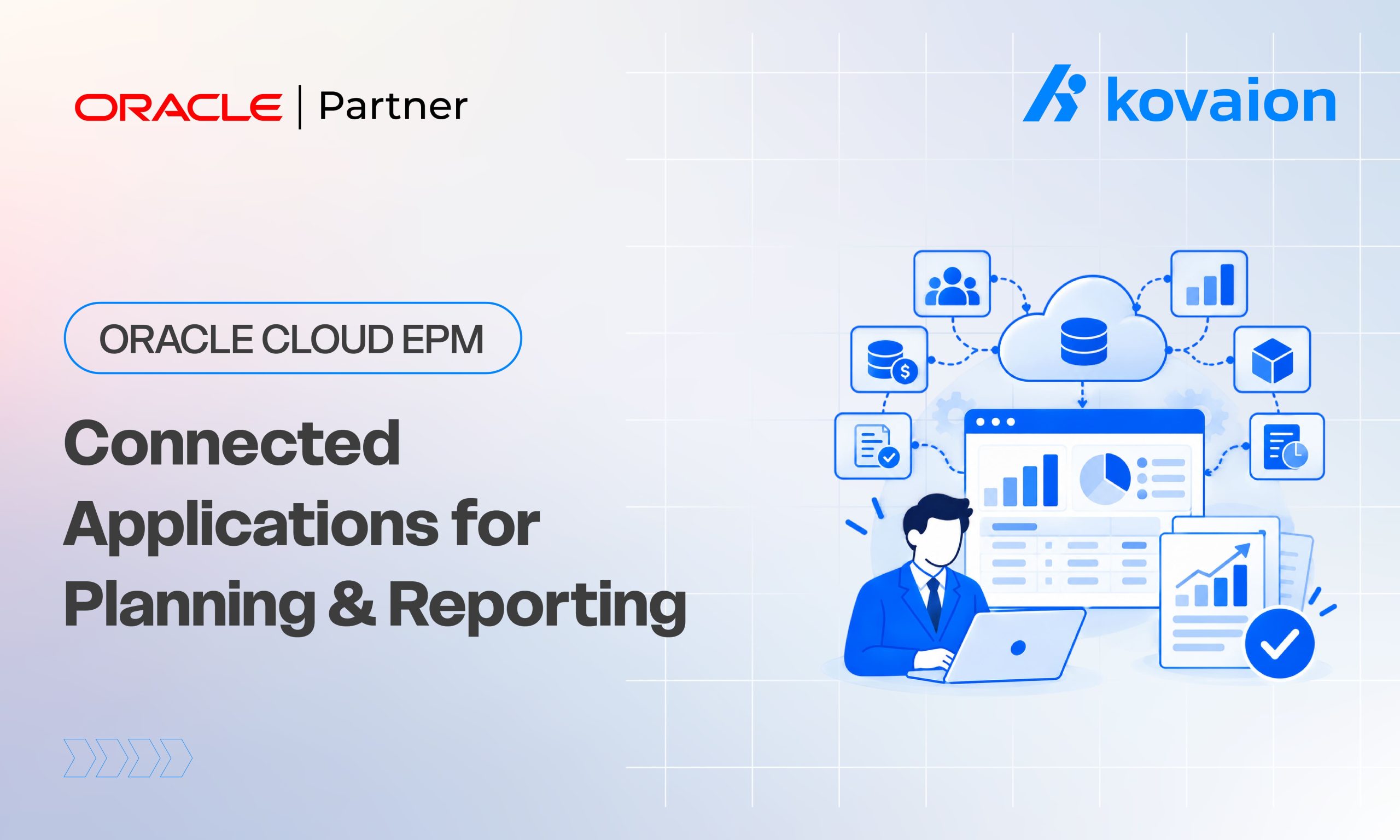
Finance teams manage a range of activities, including financial planning, budgeting, forecasting, account reconciliation, consolidation, profitability analysis and reporting. Managing these processes across separate systems can make it more difficult to maintain consistent data and coordinate financial activities.
Oracle Cloud Enterprise Performance Management (EPM) provides a suite of applications designed to support these financial and operational processes. By connecting relevant Oracle Cloud EPM applications and integrating data from different sources, organisations can establish a more coordinated approach to planning, financial close, reporting and performance management.
This blog explores the key Oracle Cloud EPM applications, their capabilities, integration options and important considerations for implementation and migration.
What Are Connected Oracle Cloud EPM Applications?
Oracle Cloud EPM is a suite of cloud applications that supports enterprise planning, financial consolidation and close, account reconciliation, enterprise data management, profitability and cost management, narrative reporting and other performance management processes.
Each application supports specific business requirements. When configured to work together, these applications can help organisations connect financial data, planning activities and reporting processes across the enterprise.
For example, planning processes may use financial and operational data from source systems, while consolidation and reporting processes use relevant financial information to support period-end activities and management reporting. The appropriate application combination depends on an organisation’s business requirements, existing systems and financial processes.
Key Oracle Cloud EPM Applications and Their Capabilities
Oracle Cloud EPM includes applications for different aspects of enterprise performance management. Understanding their capabilities helps organisations determine which applications align with their planning, reporting and financial management requirements.
1. Oracle Cloud EPM Planning
Oracle Cloud EPM Planning supports planning, budgeting and forecasting processes. It enables organisations to develop financial plans, create forecasts and manage planning activities using relevant business assumptions and data.
Planning capabilities can support financial and operational planning, helping teams coordinate planning activities and evaluate different business scenarios. The application configuration should reflect the organisation’s planning requirements, workflows and reporting needs.
2. Oracle Financial Consolidation and Close
Oracle Financial Consolidation and Close supports financial consolidation and period-end close processes. It helps organisations manage consolidation activities and prepare consolidated financial results across entities.
For organisations managing multiple entities, the application provides capabilities relevant to consolidation, close management and financial reporting. Its configuration should align with the organisation’s consolidation structure, close requirements and reporting processes.
3. Oracle Account Reconciliation
Oracle Account Reconciliation supports account reconciliation processes by helping finance teams manage reconciliations and monitor their status.
Organisations can use the application to structure reconciliation activities, support review processes and manage exceptions. The implementation should consider account ownership, reconciliation frequency, approval requirements and the controls needed for the financial close process.
4. Oracle Enterprise Data Management
Oracle Enterprise Data Management supports the management and governance of enterprise data, including business dimensions and hierarchies used across applications.
Consistent master data and hierarchy management are important when different systems use common business structures for planning, consolidation and reporting. Oracle Enterprise Data Management can help organisations govern changes to these structures and manage data relationships according to defined requirements.
5. Oracle Profitability and Cost Management
Oracle Profitability and Cost Management supports the analysis of costs and profitability by applying defined allocation rules and business models.
Organisations can use the application to understand how costs are assigned across products, services, customers or other business dimensions, depending on their model. The results can support profitability analysis and cost management decisions.
6. Oracle Narrative Reporting
Oracle Narrative Reporting supports the preparation and management of financial and management reporting packages that combine narrative content with financial information.
It can help teams coordinate reporting content, manage review workflows and prepare structured reports for stakeholders. Reporting requirements, data sources and review responsibilities should be considered when designing the solution.
7. Oracle Sales Planning and Strategic Workforce Planning
Oracle Cloud EPM provides planning capabilities for specific business areas, including sales planning and workforce planning.
Sales Planning supports sales-related planning activities, while Strategic Workforce Planning supports workforce planning based on organisational needs and business objectives. These capabilities can help connect relevant operational assumptions with broader planning activities.
The choice of planning capabilities should reflect the organisation’s requirements, the availability of relevant data and the level of detail needed for its planning models.
8. Oracle Tax Reporting
Oracle Tax Reporting supports tax provision and tax reporting processes. It provides capabilities to manage tax-related information and reporting activities within the organisation’s tax process.
Implementation considerations may include the organisation’s tax reporting structure, data requirements, review processes and reporting obligations. The solution should be configured to meet the organisation’s specific requirements.
How Oracle Cloud EPM Applications Integrate
Integration is an important consideration when connecting Oracle Cloud EPM applications with each other and with external source systems. The appropriate integration approach depends on the systems involved, data structures, frequency of updates and business process requirements.
1. Data Integration
Oracle Cloud EPM provides data integration capabilities to support the movement and mapping of data between source systems and EPM applications.
Integration design should define the source of each data set, the required mappings, transformation rules, load frequency and validation requirements. These decisions help establish a repeatable process for bringing relevant data into the target application.
2. Data Maps and File-Based Integration
Depending on the application and use case, organisations can use data maps and file-based integration approaches to transfer data between supported applications and systems.
Data maps can support data movement between relevant EPM applications. File-based processes can support data exchange where files are part of the source system or operational workflow.
The implementation should account for file formats, dimension mappings, data validation, load scheduling and error handling. These details vary according to the source system and the target application.
3. REST APIs
Oracle Cloud EPM provides REST APIs that can support programmatic interaction with supported services and administrative or application operations.
REST APIs may be relevant when organisations need to incorporate EPM activities into broader integration or automation workflows. The design should account for authentication, access permissions, supported operations, error handling and monitoring.
API availability and supported operations depend on the relevant Oracle Cloud EPM service and its documentation.
4. Integration Design Considerations
A reliable Oracle EPM integration approach should be designed around the organisation’s actual business processes and technical environment.
- Source systems: Identify the systems that provide financial, operational and reference data.
- Data mapping: Define how source values map to the dimensions and structures used by the target application.
- Data quality: Establish validation rules to identify missing, invalid or inconsistent data.
- Integration frequency: Determine how often data needs to be refreshed to support the relevant process.
- Security: Configure access and authentication according to the organisation’s security requirements.
- Monitoring and error handling: Define how integration failures are identified, investigated and resolved.
- Reconciliation: Establish checks to verify that transferred data aligns with the expected results.
These considerations help organisations develop an integration design that is appropriate for their applications, data and operational requirements.
Considerations for Oracle EPM Implementation and Migration
Implementing Oracle Cloud EPM or migrating from an existing EPM environment requires an understanding of current processes, application requirements, data structures and integration dependencies. A structured approach can help teams plan the transition and validate the target environment.
1. Assess Existing Applications and Requirements
Begin by documenting the current financial planning, consolidation, reconciliation and reporting processes. Identify the applications in use, existing integrations, data sources, business rules and reporting requirements.
This assessment helps establish which capabilities need to be retained, reviewed or redesigned as part of the implementation or migration.
2. Define the Target Application Design
Identify the Oracle Cloud EPM applications required to support the organisation’s business processes. Define the relevant dimensions, hierarchies, workflows, access requirements and reporting structures.
The target design should avoid unnecessary complexity while addressing the organisation’s functional and technical requirements.
3. Plan Data Migration and Integration
For migration projects, identify the data, metadata, application configurations and historical information that need to be considered for the target environment.
Review existing integration dependencies and determine how data will be transferred, mapped and validated. Migration requirements and available approaches depend on the source environment, target application and supported Oracle migration options.
4. Test the Configuration and Results
Testing should cover the relevant application configurations, data loads, business rules, workflows, calculations and reports.
Where appropriate, compare results with the existing process, investigate discrepancies and confirm that the configured solution meets the agreed requirements. User acceptance testing can also help validate whether the application supports day-to-day business activities.
5. Plan for Ongoing Maintenance
After implementation, define responsibilities for application administration, access management, integration monitoring, issue resolution and configuration changes.
Organisations should also consider Oracle Cloud EPM updates and review relevant release information to understand changes that may affect their applications or processes.
How Kovaion Supports Oracle Cloud EPM Requirements
Organisations evaluating Oracle Cloud EPM may need support with application selection, solution design, implementation, migration or ongoing optimisation. Kovaion provides Oracle EPM Cloud services to support organisations in aligning their EPM environment with business and technical requirements.
Oracle EPM Consulting and Implementation
Kovaion can support organisations in assessing their Oracle EPM requirements and planning an implementation approach aligned with their financial planning, reporting and performance management needs.
Solution design should consider the applications required, business processes, data structures, integration dependencies and reporting expectations.
Hyperion to Oracle Cloud EPM Migration
Organisations considering a move from Oracle Hyperion to Oracle Cloud EPM need to assess their existing applications, configurations, integrations and data requirements.
Kovaion’s Oracle EPM services can support migration planning based on the existing environment and the target cloud requirements. The migration approach should be selected after reviewing the source environment and the supported options.
Oracle EPM Optimisation and Support
Organisations with an existing Oracle EPM environment may need to review application configurations, integrations, data processes and reporting requirements as their business needs change.
Kovaion can help organisations assess their Oracle EPM requirements and identify areas for configuration review, optimisation and support, subject to the scope of the engagement.
To learn more about Kovaion’s service offering, visit the Oracle EPM Cloud Services page.
Connect Your Financial Processes with Oracle Cloud EPM
Connecting planning, consolidation, reconciliation, data management and reporting processes requires the right combination of Oracle Cloud EPM applications, integration methods and implementation decisions. A solution aligned with your business requirements can help establish more consistent financial processes and support informed planning and reporting.
Whether your organisation is evaluating Oracle Cloud EPM for the first time, planning a migration from Oracle Hyperion or reviewing an existing EPM environment, Kovaion can help you assess your requirements and identify an appropriate path forward.
Kovaion’s Oracle EPM Cloud services cover consulting, implementation, migration, optimisation and support. The engagement approach can be aligned with your existing applications, financial processes, integration landscape and target outcomes.
Discuss your Oracle EPM requirements with Kovaion. Connect with our team to explore your current environment, understand your implementation or migration considerations, and determine the next steps for your Oracle Cloud EPM journey.
Connect Your Financial Processes with Oracle Cloud EPM
Planning an Oracle Cloud EPM implementation, considering a migration from Oracle Hyperion, or looking to optimise your existing EPM environment?
Kovaion helps organisations assess their Oracle EPM requirements and plan an approach aligned with their financial planning, consolidation, reconciliation, data management and reporting processes. From consulting and implementation to migration, optimisation and support, our team can help you evaluate the next steps based on your existing applications, integration requirements and business objectives.
Connect with Kovaion to discuss your Oracle EPM requirements and explore an approach suited to your organisation.
Frequently Asked Questions
1. What are Oracle Cloud EPM applications?
Oracle Cloud EPM applications support enterprise performance management processes such as planning, budgeting, forecasting, financial consolidation, account reconciliation, enterprise data management, profitability analysis, narrative reporting and tax reporting.
2. Which Oracle Cloud EPM applications support financial planning?
Oracle Cloud EPM Planning supports financial planning, budgeting and forecasting. Depending on the organisation’s requirements, sales planning and strategic workforce planning capabilities may also support specific planning needs.
3. How do Oracle Cloud EPM applications integrate?
Integration options depend on the applications and systems involved. Supported approaches can include data integration capabilities, data maps, file-based integration and REST APIs. The appropriate method should be selected according to data requirements and supported functionality.
4. What is the role of Oracle Enterprise Data Management?
Oracle Enterprise Data Management supports the governance and management of enterprise data, including business dimensions and hierarchies used across applications.
5. Can organisations migrate from Oracle Hyperion to Oracle Cloud EPM?
Organisations can assess migration options for moving from Oracle Hyperion to Oracle Cloud EPM. The appropriate approach depends on the existing environment, target applications, configuration and Oracle’s supported migration options.
6. What should organisations consider before implementing Oracle EPM?
Key considerations include business requirements, application selection, solution design, data structures, integration dependencies, security, testing, reporting and ongoing maintenance.
7. How can organisations improve Oracle EPM integration?
Organisations can review data mapping, validation rules, integration frequency, security, monitoring and error handling. Integration design should be aligned with the requirements of the source systems and target EPM applications.
8. How can Kovaion support Oracle EPM requirements?
Kovaion provides Oracle EPM Cloud services covering consulting, implementation, migration, optimisation and support. The appropriate engagement scope depends on the organisation’s existing environment and business requirements.