Oracle APEX 26.1: Exploring APEXlang and AI-Driven Development

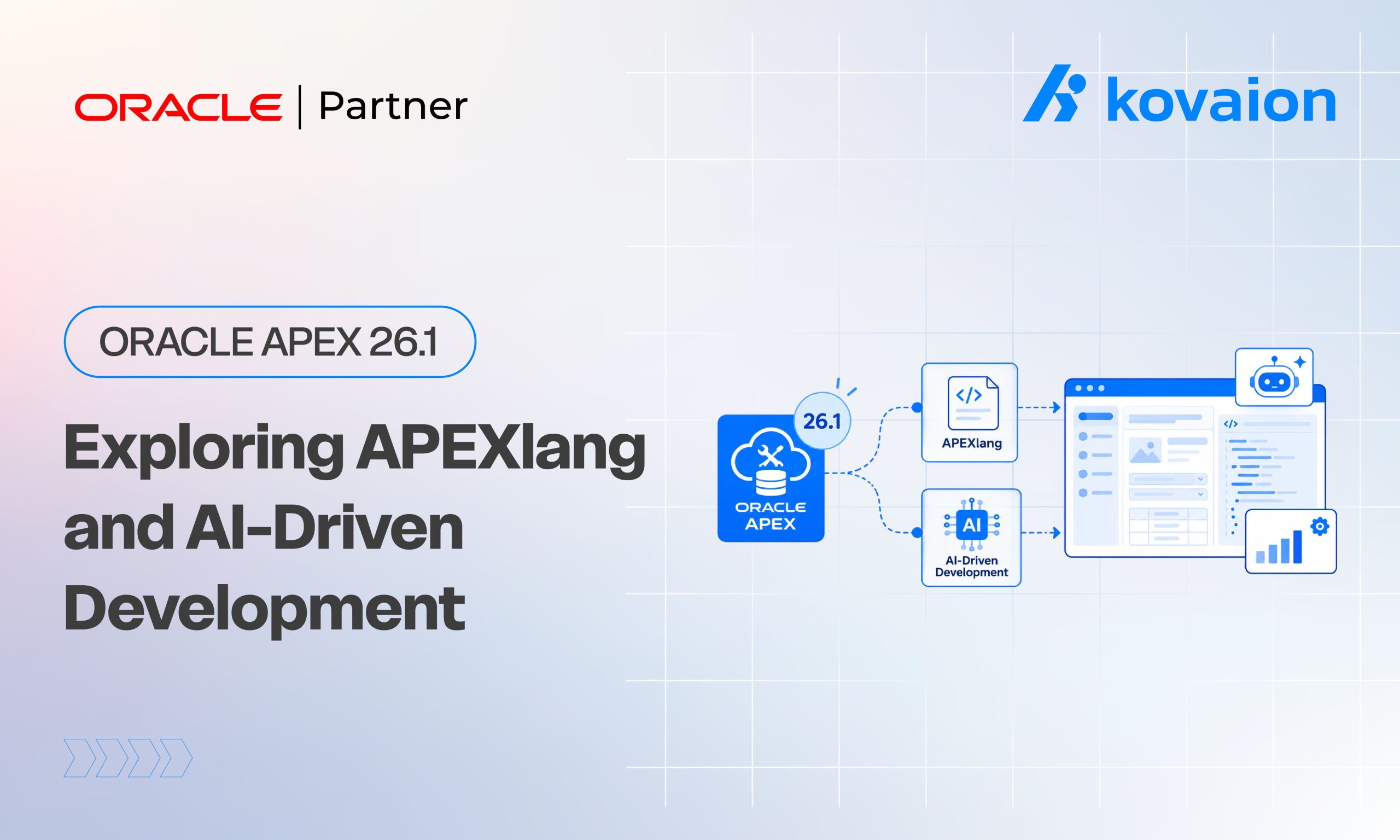
The way enterprise applications are built is evolving as artificial intelligence moves from assisting developers with individual tasks to becoming part of the application development process itself. With Oracle APEX 26.1, Oracle introduces APEXlang, an Open Application Definition Language designed to represent Oracle APEX applications in a structured, human-readable form. The approach extends APEX’s declarative development model into an environment where application intent can be understood and worked with by both developers and AI systems.
For organizations investing in Oracle APEX development, this opens new possibilities for building, reviewing, managing, and evolving applications through modern development workflows. APEXlang brings together application specifications, source control, validation, governance, and AI-assisted development, creating a foundation for a more structured approach to generative application development. This blog explores what Oracle APEX 26.1 and APEXlang introduce, how they can influence enterprise application development, and what organizations should consider as they adopt AI-driven approaches to Oracle APEX.
This blog explores the key capabilities of APEXlang, its role in AI-driven application development, and what Oracle APEX 26.1 means for organizations planning their next generation of enterprise applications.
APEXlang Explained: From Application Export to AI-Ready Development
APEXlang is a new application specification language introduced with Oracle APEX 26.1 to provide a structured way of representing Oracle APEX applications. Instead of relying only on traditional application export formats, APEXlang represents application definitions through readable .apx files and related assets. This makes application components easier for developers and modern development tools to understand, manage, and work with.
The shift is particularly relevant for teams adopting AI-assisted Oracle APEX development. A structured application representation gives AI tools clearer information about an application’s components, configuration, and relationships, creating opportunities to generate or modify applications based on defined requirements rather than relying solely on conventional code generation. At the same time, developers can review and validate these changes, keeping application architecture and business requirements at the center of the development process.
For enterprise teams, APEXlang also brings Oracle APEX development closer to familiar software engineering practices. Application definitions can be managed as files, making them better suited for version control, collaboration, comparison, and automated development workflows. This can help development teams establish a more consistent approach to Oracle APEX application development, particularly as projects become larger and involve multiple developers or environments.
In this way, APEXlang is more than a new export option in Oracle APEX 26.1. It represents a move toward a more structured development model where application specifications, development tools, source control, and AI capabilities can work together to support the application lifecycle.
Key Capabilities of APEXlang in Oracle APEX 26.1
One of the biggest changes introduced with Oracle APEX 26.1 is the ability to work with applications as structured, human-readable artifacts rather than treating application exports primarily as deployment packages. APEXlang represents application metadata through .apx files, giving development teams a format that can be reviewed, versioned, compared, validated, and managed through standard development workflows.
For Oracle APEX development teams, this creates several practical advantages. APEXlang applications can be maintained in source control, making it easier to track changes and collaborate across development environments. Developers can also work with APEXlang through Oracle SQL Developer for VS Code and SQLcl, while Oracle APEX 26.1 provides capabilities for viewing and reviewing APEXlang directly within the development experience.
More importantly, APEXlang is designed to be AI-ready. Because application definitions are represented in a structured and readable form, AI agents and development tools can work with the application specification to generate, modify, and review APEX applications. This creates a foundation for moving from conventional application development toward more AI-assisted and specification-driven Oracle APEX development, while keeping developers involved in validation, governance, and application quality.
The key capabilities of APEXlang can therefore be viewed across four areas:
- Human-readable application definitions that make application metadata easier to understand and maintain.
- Source-control readiness for versioning, reviewing, comparing, and managing application changes.
- AI-assisted development that enables coding agents and other tools to work with APEX application specifications.
- Validation and governance that help teams review AI-generated or manually modified application definitions before they are introduced into an environment.
Together, these capabilities make APEXlang in Oracle APEX 26.1 more than an alternative export format. They establish a foundation for connecting low-code application development with modern engineering practices and AI-enabled development workflows.
How APEXlang Can Transform Enterprise Application Development
The introduction of APEXlang in Oracle APEX 26.1 brings Oracle APEX development closer to modern software engineering practices while retaining the platform’s declarative, low-code approach. By representing applications as structured, readable artifacts, teams can work with application definitions outside the traditional browser-based development environment and integrate them into established development processes. Oracle supports reviewing, editing, validating, importing, and exporting APEXlang through tools such as SQLcl and Oracle SQL Developer for VS Code.
For enterprise organizations, this can create value across several stages of the application development lifecycle:
- Better source control and collaboration: APEXlang files can be maintained in source control systems such as Git, allowing teams to track application changes, review updates, compare versions, and manage development across environments. This provides a more familiar workflow for organizations that already follow structured software development and DevOps practices.
- More structured AI-assisted development: Because APEXlang represents application intent in a structured format, AI coding agents can work with application definitions rather than generating application code without an understanding of the APEX application model. Developers can use AI to generate or modify application components while retaining the ability to review and validate the resulting specifications.
- Improved application governance: Enterprise applications need more than rapid development. They also require visibility, validation, security, and control over changes. APEXlang supports workflows where application artifacts can be reviewed, validated, scanned, versioned, and governed before changes are introduced into an environment.
- Greater development flexibility: Teams do not have to choose between App Builder and external development tools. Oracle APEX 26.1 allows developers to continue using App Builder while using APEXlang with external tools when required. Changes can be exported, worked on externally, validated, and brought back into the APEX environment.
This makes Oracle APEX 26.1 particularly relevant for organizations looking to modernize existing applications or establish more scalable development practices. APEXlang does not replace the need for experienced Oracle APEX developers; instead, it provides them with a more structured foundation for combining low-code development, source control, automation, and AI-assisted application development.
The result is a development model where AI can help accelerate application creation while enterprise teams continue to maintain control over the application architecture, business requirements, quality, and governance.
Getting Started with AI-Driven Oracle APEX Development
The capabilities introduced with Oracle APEX 26.1 create new possibilities for organizations that want to incorporate AI into their application development lifecycle. However, adopting AI-assisted development is not simply about generating an application from a prompt. The quality of the application still depends on clearly defined requirements, appropriate application architecture, data models, business rules, and effective validation. Oracle’s APEX 26.1 documentation positions APEXlang as a foundation for working with AI coding agents while keeping application definitions structured, reviewable, and validated.
Organizations can begin by identifying suitable applications or development processes where Oracle APEX and AI-assisted development can deliver measurable value. Existing applications can be explored through APEXlang, while new projects can use structured specifications and blueprints to establish application requirements before development progresses. This approach allows teams to refine requirements early, validate application structures, and gradually introduce AI into established development workflows. Oracle APEX 26.1 also supports specification-driven application scaffolding, creating a practical path from functional requirements to a working application foundation.
A successful AI-driven Oracle APEX development strategy should therefore consider:
- Application readiness: Identify applications and business processes that are suitable for modernization or AI-assisted development.
- Clear specifications: Define business requirements, data models, user journeys, and application behavior before relying heavily on AI generation.
- Development governance: Establish processes for reviewing, validating, testing, and managing AI-generated application changes.
- Source-control practices: Use APEXlang files within appropriate version-control workflows to improve traceability and collaboration.
- Developer expertise: Combine AI capabilities with experienced Oracle APEX developers who can make architectural decisions, implement business logic, and ensure enterprise requirements are met.
This approach allows organizations to treat AI as an accelerator rather than a replacement for development expertise. With Oracle APEX 26.1, APEXlang provides the structured foundation, while experienced teams bring the business context, technical judgment, and governance needed to turn AI-assisted development into reliable enterprise applications.
Why Choose Kovaion for Oracle APEX Development
The capabilities introduced with Oracle APEX 26.1 and APEXlang create new opportunities for organizations to modernize application development, introduce AI-assisted workflows, and build applications that are easier to manage throughout their lifecycle. Turning these capabilities into production-ready enterprise solutions, however, requires more than understanding the technology. It requires expertise across application architecture, Oracle Database, integrations, security, business processes, and enterprise delivery.
Kovaion brings this broader Oracle expertise to Oracle APEX development, helping organizations build custom applications, extend Oracle Fusion environments, modernize legacy applications, and connect business processes across the Oracle ecosystem. Our approach combines Oracle APEX with Oracle Database, OCI, REST APIs, AI capabilities, and enterprise integration patterns to create secure and scalable solutions aligned with specific business requirements.
With the evolution of Oracle APEX 26.1, organizations can also explore new approaches to application development using structured specifications, source-control practices, and AI-assisted development. Kovaion can help businesses assess where these capabilities fit within their existing application landscape and establish an approach that balances development speed with architecture, governance, security, and long-term maintainability.
Whether the goal is to build a new Oracle APEX application, extend Oracle Fusion HCM or ERP, modernize an existing application, or explore AI-enabled enterprise workflows, Kovaion provides end-to-end Oracle APEX expertise to help turn business requirements into scalable digital solutions.
Ready to explore what Oracle APEX 26.1 can bring to your application development strategy? Connect with Kovaion to discuss your requirements and identify the right path for your Oracle APEX journey.